Tesla Solar Roof Pros and Cons USA: 2026 Complete Guide
The integration of clean energy generation into residential building materials represents a major shift in modern home construction and remodeling across the United States. Building-Integrated Photovoltaics (BIPV)—materials that serve as both the primary weather barrier and the solar energy collector—have evolved from experimental architectural concepts into mainstream residential options. Among these technologies, the Tesla Solar Roof has established itself as one of the most prominent BIPV systems available to American homeowners.
Evaluating tesla solar roof pros and cons USA market considerations requires examining more than just energy production metrics. A Tesla Solar Roof is fundamentally a complete structural roof replacement combined with a distributed solar generation system and integrated energy storage options. This guide offers an objective, textbook-quality breakdown of how the system functions, its financial parameters, installation realities, performance limitations, and overall long-term value to help property owners determine if BIPV technology suits their building needs.
Overview of Tesla Solar Roof Pros and Cons USA
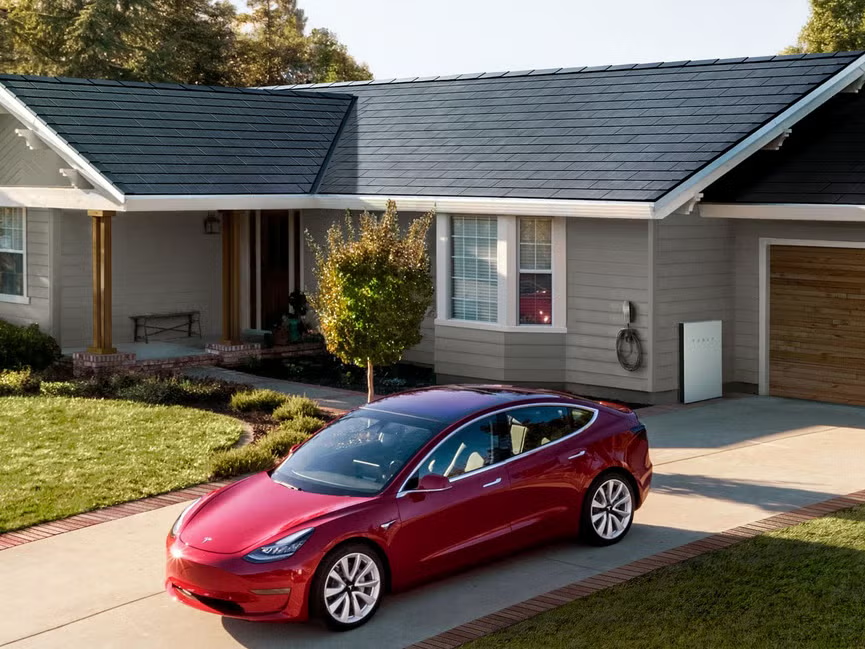
Understanding tesla solar roof pros and cons USA starts with recognizing how BIPV differs from traditional rack-mounted solar panels. Traditional residential solar systems consist of silicon photovoltaic panels mounted on metal racks elevated above an existing roof deck. In contrast, the Tesla Solar Roof completely replaces the existing roofing material. It utilizes a combination of active solar tiles containing embedded photovoltaic cells and visually identical inactive glass or steel tiles along roof edges, valleys, and shaded planes.
TRADITIONAL RACK-MOUNTED SOLAR ASSEMBLY:
[ Solar Panel ] ---> [ Mounting Rack ] ---> [ Gap / Airflow ] ---> [ Existing Asphalt Shingle Roof ]

TESLA BUILDING-INTEGRATED PHOTOVOLTAIC (BIPV) ASSEMBLY:
[ Integrated Solar Glass Tile / Steel Tile ] ---> [ Underlayment ] ---> [ Structural Roof Deck ]
In standard practice, homeowners evaluate the Tesla Solar Roof when facing an immediate need for a full roof replacement while simultaneously desiring solar generation and battery backup. The system’s primary attraction is its seamless aesthetic: from street level, active and inactive tiles blend together to create a smooth, modern architectural plane that avoids the bulky profile of traditional panel arrays.
The main trade-off when evaluating tesla solar roof pros and cons USA applications involves balancing upfront capital cost against long-term financial return. The Tesla Solar Roof carries a significantly higher initial price tag than a standard asphalt roof paired with traditional solar panels. Additionally, because individual solar tiles are smaller and lay flush against the roof deck, solar generation efficiency per square foot can be lower than top-tier standalone solar panels due to higher operating temperatures and lower cell ventilation.
System Components and Installation Variations
A complete Tesla Solar Roof installation incorporates several integrated hardware elements and structural materials.
| Category / Type | Description | Common Use Case | Time / Cost / Effort Level |
| Active Solar Tiles | Tempered glass or steel tiles containing embedded PV cells (typically ~72 watts per tile). | Installed on unshaded roof planes with optimal solar orientation (South/West). | High material cost; precise wiring effort required. |
| Inactive Architectural Tiles | Visually identical glass or metal tiles without PV cells. | Used on heavily shaded planes, valleys, hips, and perimeter cuts. | Moderate material cost; high custom trimming labor. |
| Tesla Solar Inverter | Wall-mounted string inverter converting direct current (DC) to alternating current (AC). | Installed near main electrical service panel to route home power and grid feed. | Standard electrical installation complexity and cost. |
| Tesla Powerwall Battery | Integrated lithium-iron-phosphate (LFP) home energy storage unit. | Whole-home or critical-load backup power and time-of-use energy management. | High equipment cost; moderate electrical integration labor. |
Choosing Between System Variations
Selecting system parameters depends heavily on roof geometry, home energy consumption, and local utility rate structures. Homeowners with simple gabled roofs and high electricity bills benefit from a higher ratio of active tiles. Conversely, homes with complex rooflines—featuring multiple dormers, hips, and valleys—require a higher proportion of inactive tiles, which increases installation labor without increasing energy production.
Practical Scenarios and Project Use-Cases
Scenario 1: New Custom Home Construction in a Strict HOA Community
A homeowner building a modern single-family home in a suburban community with strict Architectural Review Committee (ARC) rules prohibiting visible solar racks.
-
Components & Materials: Active solar tiles, inactive matching tiles, Tesla Solar Inverter, 2x Tesla Powerwall units, seamless metal flashing.
-
Process Steps:
-
Coordinate roof deck framing and underlayment specifications directly with the home builder.
-
Map tile layouts in architectural software to maximize south/west facing solar density.
-
Install underlayment, run hidden wiring harnesses, and lay active/inactive tiles sequentially.
-
Connect tiles to inverters and Powerwalls prior to interior drywall completion.
-
-
Why Relevant: BIPV satisfies strict homeowner association (HOA) aesthetic requirements while providing renewable energy generation and backup power that meets modern energy efficiency standards.
Scenario 2: End-of-Life Roof Replacement on an Older Home
A homeowner whose 25-year-old asphalt shingle roof has reached the end of its service life and requires a complete tear-off.
-
Components & Materials: Complete roof tear-off materials, structural decking repairs, high-temperature self-adhering underlayment, active and inactive tiles, Powerwall integration.
-
Process Steps:
-
Strip old roofing materials down to bare plywood sheathing.
-
Inspect and replace damaged roof deck boards.
-
Upgrade home electrical service panel to handle solar input if necessary.
-
Lay the new BIPV system and commission energy storage equipment.
-
-
Why Relevant: Replacing a failing roof provides the ideal economic window for a Tesla Solar Roof, combining the cost of a necessary structural roof replacement with a solar investment.
Scenario 3: High-Electricity Usage Home in a Storm-Prone Grid Region
A home in a coastal or forested zone subject to high utility rates and frequent storm-related grid outages.
-
Components & Materials: Active solar tiles optimized for high daily kWh output, multiple Powerwall batteries, automatic transfer switch, wind-resistant flashing trims.
-
Process Steps:
-
Size active tile area to match high summer cooling loads.
-
Install Powerwall system configured for automatic islanding during grid failures.
-
Secure local utility Interconnection Agreement and Permission to Operate (PTO).
-
-
Why Relevant: Demonstrates the functional utility of integrated solar generation and storage, providing continuous power security during storm outages alongside monthly electric bill savings.
+-----------------------------------------------------------------------------------+
|                            SCENARIO COMPARISON MATRIX                             |
+-------------------+----------------------------+----------------------------------+
| Metric            | New Construction           | End-of-Life Roof Replacement     |
+-------------------+----------------------------+----------------------------------+
| Primary Driver    | Aesthetics & HOA Compliance| Structural Need + Energy Savings |
| Cost Efficiency   | Moderate (Saves tear-off)  | High (Combines two projects)     |
| Labor Complexity  | Low (Open framing access)  | High (Tear-off & deck repairs)   |
| Payback Timeline  | Longer (Part of mortgage)  | Shorter (Offsets roof + power)   |
+-------------------+----------------------------+----------------------------------+
Financial Planning, Cost Factors, and Resource Allocation
Evaluating tesla solar roof pros and cons USA financially requires analyzing both upfront costs and potential tax incentives. The Federal Residential Clean Energy Credit (Section 25D) allows homeowners to claim a tax credit on a portion of the solar-generating equipment and battery storage.
Note: Financial figures below represent generalized national averages across the United States. Costs vary significantly based on home square footage, roof complexity, local utility rules, and certified installer labor rates.
| Category | Estimated Cost Range (USD) | Explanation | Optimization Tips |
| System Materials & Tiles | $35.00 – $60.00 per sq. ft. | Combined cost of active solar tiles, inactive glass/metal tiles, and underlayments. | Simplify roof geometry on new builds to reduce complex inactive edge tile trimming. |
| Old Roof Removal & Prep | $5,000 – $10,000 | Stripping old shingles, repairing rotted decking, and disposing of waste. | Complete any necessary structural or chimney repairs prior to solar crew arrival. |
| Powerwall Battery (per unit) | $9,000 – $12,000 | Hardware and installation cost for integrated energy storage. | Size battery capacity strictly for critical loads if budget-constrained. |
| Electrical Upgrades & Permitting | $2,500 – $6,000 | Main panel upgrades, utility interconnection fees, and local building permits. | Audit existing electrical panel capacity before final contract signing. |
Evaluation Frameworks, Software Tools, and Support Networks
A successful BIPV project relies on proper diagnostic evaluation tools and certified installation networks.
1. 3D Solar Shade & Solar Access Analysis
-
Description: Aerial LiDAR and software modeling used to calculate annual kilowatt-hour (kWh) production based on roof pitch, azimuth, and shade from trees or adjacent structures.
-
Advantages: Accurately maps exactly where active solar tiles should be placed for maximum financial return.
-
Disadvantages: Computer models may miscalculate localized shade changes caused by growing trees over a 25-year period.
2. Tesla Certified Installer Network
-
Description: Third-party roofing and electrical contractors trained and certified by Tesla to install Solar Roof hardware.
-
Advantages: Offers local contractor accountability, faster scheduling, and regional building code familiarity.
-
Disadvantages: Pricing and labor quality can vary significantly between independent certified installer companies.
3. Integrated Mobile Application Energy Monitoring
-
Description: Real-time smartphone monitoring showing live solar generation, battery status, home power consumption, and grid export.
-
Advantages: Provides clear operational insights and immediate diagnostic alerts if a tile string underperforms.
-
Disadvantages: Requires continuous home Wi-Fi connectivity for remote monitoring and firmware updates.
Risk Factors, Performance Challenges, and Drawbacks
When analyzing tesla solar roof pros and cons USA market experiences, several physical limitations and financial risks must be acknowledged:
-
High Upfront Capital Outlay: A Tesla Solar Roof often costs two to three times more than a standard asphalt shingle roof paired with conventional solar panels. Mitigation: Limit consideration to situations where a complete roof replacement is already required and long-term home ownership (>15 years) is planned.
-
Thermal Efficiency Loss in Hot Climates: Standard solar panels are elevated above the roof, allowing air to circulate underneath and cool the cells. Because BIPV tiles lay flush against the roof deck, they run hotter on sunny days, which slightly reduces photovoltaic efficiency. Mitigation: Ensure attic space beneath the deck features robust ridge-and-soffit ventilation to exhaust excess heat.
-
Extended Installation and Permitting Timelines: Coordinating roof tear-off, specialized tile fitting, electrical panel upgrades, and utility Permission to Operate (PTO) can take several months. Mitigation: Initiate site surveys and utility paperwork well before the preferred installation window.
-
Complex Repairs and Troubleshooting: Diagnosing a loose wire harness or failed tile within a field of hundreds of interconnected tiles requires specialized trade knowledge. Mitigation: Ensure the system is installed by an established certified contractor offering long-term labor warranties alongside Tesla’s 25-year product warranty.
Maintenance, System Management, and Best Practices
While glass and steel BIPV tiles are physically durable—boasting Class 4 impact ratings (highest hail resistance rating) and Class A fire ratings—ongoing care maximizes energy production.
-
Visual Inspection After Severe Weather: Check roof planes from the ground using optics or a drone following hail or wind storms to verify no tiles have shifted or cracked.
-
Debris and Leaf Clearance: Accumulated leaves, pine needles, or dirt along valleys and gutters can shade active tiles and reduce string output. Clear roof planes carefully using low-pressure water hoses or non-abrasive soft brushes.
-
Inverter Air Vents Inspection: Ensure wall-mounted Tesla inverters remain free of dust, cobwebs, or overgrown landscaping to maintain proper cooling airflow.
-
Annual System Health Check via App: Review annual power production reports in the mobile monitoring application to ensure power output matches historical baseline trends.
+------------------------------------------------------------------+
|                  TESLA SOLAR ROOF MAINTENANCE CHECKLIST          |
+------------------------------------------------------------------+
| [ ] Inspect active tile surfaces for heavy dirt or leaf buildup  |
| [ ] Clear perimeter gutters and roof valley drainage paths       |
| [ ] Verify Tesla Inverter cooling vents are free of obstructions |
| [ ] Check mobile app for tile string performance warnings        |
| [ ] Confirm Powerwall battery standby status and grid settings    |
+------------------------------------------------------------------+
System Documentation, Monitoring, and Reporting
Maintaining organized documentation is essential for warranty claims, real estate disclosures, and utility compliance. A complete system binder should contain:
-
Original Purchase & Installation Contract: Outlining line-item tile counts, inverter specifications, and certified installer labor guarantees.
-
25-Year Warranty Certificates: Detailing product, weatherization (leak-free), and power output guarantees (guaranteeing at least 85%–90% power capacity at year 25).
-
Utility Interconnection & PTO Documentation: Official sign-off letters from the local electric utility approving grid connection.
Illustrative Examples
-
Real Estate Appraisal Value Addition: A homeowner in California listed their property for sale. By providing certified documentation showing an integrated Tesla Solar Roof with two Powerwalls under active 25-year warranty, the home appraiser assigned higher adjustments for green building upgrades, helping justify a premium sales price.
-
Warranty Support for Tile Replacement: An owner noticed a drop in daily kWh production via their mobile app. Remote diagnostics by the installer identified a single faulty active tile string. Because the owner maintained original installation records, the certified installer replaced the affected tiles under Tesla’s 25-year product warranty at zero labor cost.
Closing Summary
Weighing the tesla solar roof pros and cons USA factors comes down to evaluating individual property goals, roof condition, aesthetic priorities, and long-term budget. The system offers exceptional visual integration, Class 4 impact resistance, and a unified 25-year warranty covering both weatherization and power generation. However, its high initial capital cost, longer financial payback period, and complex installation requirements make it a specialized premium choice rather than a universal replacement for traditional solar panels. For homeowners building a new property or needing an immediate roof replacement who prioritize curb appeal, the Tesla Solar Roof presents a compelling BIPV option.
Frequently Asked Questions
How long does a Tesla Solar Roof last compared to traditional solar panels?
A Tesla Solar Roof comes with a 25-year product, weatherization (leak-proof), and power generation warranty. The glass and steel tiles themselves are engineered to last well beyond 25 years. Traditional solar panels typically carry a 25-year power warranty, but the underlying asphalt shingle roof beneath them may require replacement after 20 to 25 years, requiring the panels to be removed and reinstalled.
Does a Tesla Solar Roof work during a power outage?
Yes, provided the system is installed alongside a Tesla Powerwall battery storage unit. During a utility power failure, the system automatically disconnects from the public grid (islanding) and uses the solar tiles to generate power while storing excess energy in the Powerwall, keeping home circuits operational. Without a battery, grid-tied solar systems automatically shut down during outages for safety reasons.
How does the cost of a Tesla Solar Roof compare to putting solar panels on an existing roof?
If an existing roof is in good structural condition, installing traditional rack-mounted solar panels is significantly cheaper—often costing one-half to one-third the price of a full Tesla Solar Roof system. However, if a home requires an immediate $15,000–$25,000 roof replacement, combining that roof cost with traditional solar panels narrows the price gap, making the Tesla Solar Roof a more competitive premium alternative.