Authentic Welsh Slate Roof Identification UK: Expert Guide
Welsh slate is widely recognized as one of the finest natural building materials in the world, renowned for its density, structural strength, and exceptional longevity. Formed over 400 to 600 million years ago during the Cambro-Ordovician geological periods, slate deposits from North Wales possess an extraordinarily low water absorption rate (below 0.3%) and a high resistance to atmospheric pollutants, frost, and ultraviolet radiation. Because a genuine Welsh slate roof can easily exceed a 100-year service life, it remains the benchmark specification for historic restorations, conservation zones, and high-end architectural builds across the United Kingdom.
However, the UK market features numerous imported slates—primarily from Spain, China, and South America—that attempt to replicate the visual appearance of Welsh stone. While some imported alternatives offer adequate performance, others are prone to rapid fading, pyritic rusting, or delamination within a few decades. Mastering authentic Welsh slate roof identification UK empowers building surveyors, heritage officers, roofing contractors, and property owners to distinguish genuine Welsh slate from inferior substitutes. This guide details the physical characteristics, quarry-specific variations, field testing methods, and documentation frameworks required to verify authentic Welsh slate.
Overview of Authentic Welsh Slate Roof Identification UK
Understanding authentic Welsh slate roof identification UK requires analyzing the geological and visual markers that set North Wales slate apart from global alternatives. Welsh slate is composed of fine-grained metamorphic rock subjected to intense subterranean heat and pressure. This process created a dense, highly aligned cleavage plane that allows craftsmen to split the stone into thin, flat tiles without compromising structural integrity. Unlike softer slates containing calcium carbonate or reactive iron pyrites, authentic Welsh slate maintains its structural composition and colorfastness indefinitely.
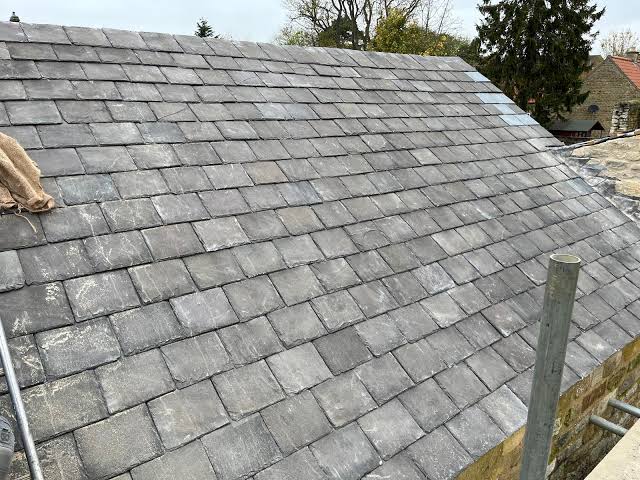
In practical field identification, surveyors evaluate several key physical traits: color tone, grain texture, surface “riven” quality, edge dressed finish, and sound resonance. Genuine Welsh slates typically present in distinct regional palettes, including the famous Heather Blue (purple) of the Penrhyn quarry, the smooth Dark Blue-Grey of Ffestiniog, and the textured, white-veined Dark Blue-Grey of Cwt-y-Bugail. Furthermore, historic UK roofs laid with Welsh slate often feature traditional regional sizes—historically named after aristocratic titles such as “Countesses,” “Duchesses,” and “Ladies”—or random-width graduated courses.
The ultimate goal of performing authentic Welsh slate roof identification UK is to preserve architectural heritage, ensure compliance with local planning authorities (especially Listed Buildings and Conservation Areas), and verify that replacement materials match the structural lifespan of the original roof deck. Accurate identification prevents premature roof failure and protects property values.
Major Welsh Quarry Types and Geological Variations
The North Wales slate industry historically spanned several major quarrying districts, each producing slate with distinct visual and physical characteristics. The table below outlines the primary active and historic Welsh slate categories found on UK roofs.
| Category / Type | Description | Common Use Case | Time / Cost / Effort Level |
| Penrhyn (Heather Blue / Bangor Blue) | Distinctive purple/heather-blue hue, highly unfading, fine-grained, smooth riven texture. | High-status heritage builds, civic structures, Grade I listed restorations. | Premium material cost; low grading effort; ultra-long service life (100–200+ years). |
| Cwt-y-Bugail (Dark Blue-Grey) | Deep dark blue-grey color, often featuring subtle white mineral veining and a richer riven texture. | Conservation zones, prestigious residential builds, historic restorations. | High cost; medium installation effort; excellent weather resistance. |
| Ffestiniog (Blue-Grey) | Smooth, disciplined blue-grey slate with an even riven finish and clean aesthetic lines. | Victorian and Edwardian urban housing, traditional estate roofs. | High cost (reclaimed or new stock); low-to-medium grading effort. |
| Dinorwic (Heather Green / Plum) | Historic quarry source; produced rich plum, blue, and distinctive green-tinted slates. | Victorian terraces, regional heritage properties in North Wales and Northern England. | Reclaimed stock only; high effort to source matching batches; variable cost. |
How to Distinguish Between Quarry Types
Distinguishing between these categories relies primarily on color fastness and surface texture. Penrhyn is instantly recognizable by its rich purple or heather tint, which remains unchanged even after centuries of UV exposure. When comparing blue-grey varieties, Ffestiniog offers a flatter, smoother surface that lays exceptionally flat, whereas Cwt-y-Bugail features a more expressive, textured surface with occasional white quartz-like mineral banding.
Practical Identification Scenarios and Field Applications
Scenario 1: Pre-Purchase Home Survey on a Grade II Listed Building
A building surveyor conducts an inspection on an 1880s Victorian villa in a protected conservation area to confirm if the original roof is authentic Welsh slate or a later imported replacement.
-
Key Inspection Steps:
-
Examine the roof plane from ground level using high-magnification optics, checking for color uniformity and chalking.
-
Access the roof space (attic) to inspect the underside of the slates, checking for historic slate battens, wooden pegs, or copper nails.
-
Retrieve a fallen or loose slate sample to measure thickness, inspect the dressed chamfer edge, and perform a metallic ring acoustic test.
-
Check for pyritic rusting or “bleeding” orange streaks, which indicate cheap imported slate rather than pure Welsh stone.
-
-
Why Relevant: Listed building consent usually mandates “like-for-like” material replacement. Confirming the roof is authentic Welsh slate ensures the buyer understands future repair specifications and avoids non-compliant repairs.
Scenario 2: Sourcing Reclaimed Slate for a Heritage Roof Extension
A contractor needs to build a seamless extension on a 19th-century church roof original to Ffestiniog blue-grey slate.
-
Key Inspection Steps:
-
Measure the dimensions of existing roof slates to identify traditional imperial sizes (e.g., 20″ x 10″ “Countess” or 16″ x 8″ “Ladies”).
-
Inspect potential reclaimed batches from architectural salvage yards to verify clean nail holes and absence of marine lime deposits.
-
Perform a water absorption immersion test on sample tiles from the batch.
-
Sort and grade the reclaimed slates by thickness (Capital ~5.5mm, County ~7mm, or Celtic ~9mm) to ensure even courses on the roof plane.
-
-
Why Relevant: Mixing non-Welsh reclaimed slate with original Ffestiniog slate creates mismatched weathering patterns within 5 to 10 years, ruining the visual unity of the building.
Scenario 3: Investigating Early Failure on a 15-Year-Old “Welsh Lookalike” Roof
A property manager addresses active leaks, flaking surfaces, and soft edges on a modern housing development built in 2010 that was marketed as having “Welsh-style” slates.
-
Key Inspection Steps:
-
Remove a damaged tile and inspect for micro-delamination (layers flaking apart like cardboard).
-
Place a drop of dilute hydrochloric acid on the slate surface to test for calcium carbonate content (effervescence indicates poor quality import).
-
Check for machine-cut square edges versus traditional hand-dressed, chamfered edges typical of authentic Welsh production.
-
Review original building sign-off documents and supplier delivery dockets to verify material provenance.
-
-
Why Relevant: Many imported slates contain high carbonate levels that react with acidic UK rainfall, causing rapid softening and failure long before a genuine Welsh slate roof would show wear.
+-----------------------------------------------------------------------------------+
|                            IDENTIFICATION METRIC MATRIX                           |
+-------------------+----------------------------+----------------------------------+
| Diagnostic Test   | Authentic Welsh Slate      | Low-Grade Imported Substitute    |
+-------------------+----------------------------+----------------------------------+
| Acid Test (HCl)   | No reaction (Inert)        | Fizzes/Foams (High Carbonates)   |
| Acoustic Ring     | Clear, metallic, bell-like | Dull, thud-like, muted sound     |
| Water Absorption  | Extremely low (<0.3%)      | High (>0.6%), absorbs moisture   |
| Pyrite Content    | Inert or none              | Reactive pyrites cause rust spots|
+-------------------+----------------------------+----------------------------------+
Financial Evaluation and Resource Planning
Proper planning and budgeting for a Welsh slate roof requires understanding the cost differentials between new Welsh slate, reclaimed Welsh slate, and imported alternatives. While authentic Welsh slate carries a higher initial material price, its lifetime cost per year is significantly lower due to its multi-generational durability.
Note: The financial metrics below represent general estimates across the UK building sector. Prices vary based on quarry availability, grade thickness, regional labor rates, and whether materials are new or reclaimed.
| Category | Estimated Cost Range (GBP) | Explanation | Optimization Tips |
| New Welsh Slate (Penrhyn/Cwt-y-Bugail) | £75 – £130 per sq. metre | Covers new prime-grade Welsh slate tiles (Capital/County grades). | Purchase core standard sizes (e.g., 500x250mm) rather than custom dimensions to reduce mill costs. |
| Reclaimed Welsh Slate | £45 – £85 per sq. metre | Salvaged genuine Welsh slate from demolished or re-roofed historic buildings. | Source from reputable architectural salvage yards that grade tiles and guarantee origin. |
| High-Grade Spanish/Canadian Slate | £35 – £60 per sq. metre | Quality international slate meeting BS EN 12326 A1-S1-T1 standards. | Suitable for budget-constrained new builds outside historic conservation zones. |
| Roofing Labor (Specialist Slate Roofer) | £40 – £75 per hour / day rates | Skilled labor trained in traditional copper-nailing, holing, and slate dressing. | Hire contractors registered with the National Federation of Roofing Contractors (NFRC). |
Testing Methods, Diagnostic Tools, and Professional Support
Confirming authentic Welsh slate roof identification UK can be achieved using field tests and laboratory diagnostic methods.
1. The Acoustic Ring Test
-
Description: Hold a dry slate loosely by one corner between thumb and forefinger, then tap the center lightly with a metal knuckle, slate hammer, or coin.
-
Advantages: Immediate, non-destructive field test. Authentic high-density Welsh slate produces a crisp, clear, metallic bell-like ring.
-
Disadvantages: Requires experience; cracked or internal-fractured Welsh slates will sound dull despite being genuine.
2. BS EN 12326 Laboratory Testing Standards
-
Description: Standardized laboratory testing evaluating water absorption (A1), sulfur dioxide resistance (S1), and thermal cycle corrosion (T1).
-
Advantages: Absolute technical certainty. Genuine Welsh slate comfortably achieves A1-S1-T1 classifications, demonstrating minimal water absorption and zero structural breakdown.
-
Disadvantages: Requires destructive sampling and laboratory analysis fees.
3. Petrographic Analysis (Thin-Section Microscopy)
-
Description: Geologists examine a microscopic slice of stone under polarized light to analyze mineral composition, cleavage orientation, and grain structure.
-
Advantages: Confirms exact geological origin and can match a slate sample to specific North Wales quarry formations (Ordovician/Cambrian strata).
-
Disadvantages: Highly specialized; generally reserved for major heritage disputes or high-value legal cases.
Common Identification Risks, Pitfalls, and Misconceptions
-
Assuming All Blue-Grey Slate is Welsh: Many imported slates from Spain and China exhibit a blue-grey color similar to Ffestiniog or Cwt-y-Bugail. Color alone is never proof of origin. Mitigation: Look for characteristic white quartz veining (Cwt-y-Bugail) or demand quarry-origin documentation.
-
Confusing “Bangor” Brand Names with Welsh Origin: Some international suppliers use historic terms like “Bangor Blue type” to describe color rather than provenance. Mitigation: Verify that documentation explicitly states “Quarried in North Wales, UK” rather than “Bangor style.”
-
Mistaking Pyrite Inclusions for Failure: Some genuine slates contain harmless, inert iron pyrites (fools’ gold) that do not bleed or breakdown. However, low-grade imports contain reactive pyrites that rust into holes. Mitigation: Inspect older slates on the roof plane; if pyrites have turned brown/orange and eaten through the tile, it is not high-grade Welsh slate.
-
Overlooking Reclaimed Slate Grading: Reclaimed Welsh slate can vary in thickness if pulled from multiple roofs. Mitigation: Always sort reclaimed slates into thick, medium, and thin categories before laying to ensure horizontal courses fit flat without gaps.
Long-Term Maintenance and Conservation Management
While authentic Welsh slates are virtually indestructible under natural weather conditions, the fixings, battens, and flashings around them eventually decay. Proper ongoing management ensures the roof system reaches its full potential.
-
Bi-Annual Ground and Attic Inspections: Inspect the roof every spring and autumn. Look for slipped or missing tiles, which usually indicate rusted iron nail heads (“nail sickness”) rather than slate failure.
-
Avoid Walking Directly on Slate Planes: Slate is brittle under concentrated point loads. Roofers must use proper roof ladders or cat ladders when conducting repairs.
-
Replace Missing Slates with Matching Samples: When replacing damaged tiles, use matching Welsh slate attached via copper slate hooks or tingles (lead/copper strips) to avoid disturbing surrounding courses.
-
Clear Valleys and Leadwork: Ensure lead gutters, valleys, and chimneys are clear of debris to prevent standing water from backing up under lower slate courses.
+------------------------------------------------------------------+
|                 WELSH SLATE ROOF MANAGEMENT CHECKLIST            |
+------------------------------------------------------------------+
| [ ] Inspect ground level for slipped tiles or broken corners     |
| [ ] Check attic floor for light gaps or water staining on rafters|
| [ ] Verify lead flashings and mortar pointings remain intact     |
| [ ] Inspect copper nails for signs of corrosion or head failure   |
| [ ] Ensure roof valleys are free from moss and leaf blockage     |
+------------------------------------------------------------------+
Documentation, Historical Record-Keeping, and Certification
Maintaining a formal record of roof materials is essential for property conservation, listed building consent, and preserving resale value. A complete roof documentation binder should include:
-
Quarry Certificates of Provenance: Documentation from Welsh Slate Ltd (or authorized distributors) confirming quarry origin (Penrhyn, Cwt-y-Bugail, Ffestiniog).
-
BS EN 12326 Declarations of Performance: Technical datasheets confirming A1-S1-T1 performance ratings.
-
Salvage Batch Records: For reclaimed installations, invoices detailing the provenance, original building source (if known), and grading details.
Illustrative Examples
-
Listed Building Consent Approval: An estate manager in Snowdonia submitted an authentic Penrhyn Heather Blue quarry delivery docket alongside a surveyor’s report to the local planning authority. The heritage officer granted immediate listed building consent for a church nave restoration without requiring additional material sampling.
-
Property Sale Value Preservation: During the sale of an 1860s Georgian townhouse in Bath, the buyer’s surveyor flagged a recently re-laid roof. The seller produced original supplier invoices proving the roof was re-laid with original reclaimed Ffestiniog slate using copper nails, reassuring the buyer and preventing a price renegotiation.
Closing Summary
Mastering authentic Welsh slate roof identification UK requires evaluating geological traits, physical characteristics, and historical context. From the unmistakable heather-blue tones of Penrhyn to the smooth blue-grey finish of Ffestiniog and the textured, veined surface of Cwt-y-Bugail, genuine Welsh slate offers performance and longevity unmatched by modern substitutes. By combining field diagnostic methods—such as acoustic ring tests and acid testing—with proper quarry documentation and skilled traditional installation, property owners and building professionals can safeguard the architectural integrity and structural performance of UK heritage roofs for generations to come.
Frequently Asked Questions
How long does an authentic Welsh slate roof typically last?
An authentic Welsh slate roof routinely lasts over 100 to 150 years, with many historic installations lasting upwards of 200 to 400 years. In most cases, a Welsh slate roof is re-laid not because the slates themselves have failed, but because the timber battens or iron fixings beneath them have decayed. The original slates can usually be reclaimed, redressed, and reinstalled.
What is “nail sickness” on a Welsh slate roof?
“Nail sickness” occurs when the iron or galvanized steel nails holding the slates to the timber battens corrode and snap due to age and moisture exposure. The slates themselves remain in excellent condition, but without intact fixings, individual tiles begin slipping out of line. The standard remedy involves carefully stripping the roof, saving the authentic Welsh slates, and re-nailing them onto new battens using corrosion-resistant copper nails.
Why is Welsh slate considered superior to imported Spanish slate?
While high-grade Spanish slate meeting A1-S1-T1 standards performs well, lower-grade imports often contain higher levels of calcium carbonate and reactive iron pyrites. Calcium carbonate reacts with acidic UK rainfall, causing the slate to soften, fade, and flake over time. Welsh slate is geological older, denser, virtually non-porous, and chemical-resistant, ensuring its color and structural strength remain unaffected by UV light or acid rain for centuries.