Longrun Steel Roofing Profile Options New Zealand Guide
Longrun steel roofing is the primary roofing material across New Zealand, prized for its durability, weather resistance, and lightweight structural properties. Formed from continuous coated steel coils—such as COLORSTEEL® or ColorCote—longrun panels are custom-cut to the exact length of a roof slope. This continuous roll-forming process minimizes horizontal lap joints, providing superior protection against wind-driven rain, atmospheric salt spray, and extreme alpine weather conditions common throughout the North and South Islands.
Selecting among longrun steel roofing profile options New Zealand manufacturers offer requires balancing architectural style, structural pitch requirements, and localized environmental hazards. A profile determines not only the visual shadow lines and aesthetic character of a building, but also its water-carrying capacity, minimum allowable pitch, and span strength between battens or purlins. This guide provides a detailed, textbook-quality breakdown of profile geometries, performance metrics, installation considerations, and maintenance frameworks.
Overview of Longrun Steel Roofing Profile Options New Zealand
Understanding longrun steel roofing profile options New Zealand construction involves examining how cold-rolled steel sheets are shaped to combine structural stiffness with water management. In New Zealand, longrun steel panels are formed from high-tensile steel substrates coated with protective metallic layers (such as zinc-aluminum alloys) and baked-on paint systems engineered for high ultraviolet (UV) radiation. The profile refers to the three-dimensional geometric cross-section rolled into the flat sheet. These geometric folds give thin-gauge steel (typically 0.40mm or 0.55mm Base Metal Thickness) the rigidity required to span roof framing while channeling rainwater safely into gutters.
LONGRUN STEEL ROOFING PROFILE CROSS-SECTIONS:

1. CORRUGATED PROFILE (Traditional Sinusoidal Wave)
   _.-._.-._.-._.-._.-._.-._.-._.-._.-._.-._.-._
   (Symmetrical wave; requires minimum 8° roof pitch)

2. TRAPEZOIDAL PROFILE (Modern Ribbed Geometry)
   |___/----\___/----\___/----\___/----\___|
   (Flutes with wide flat pans; handles pitches down to 3°)

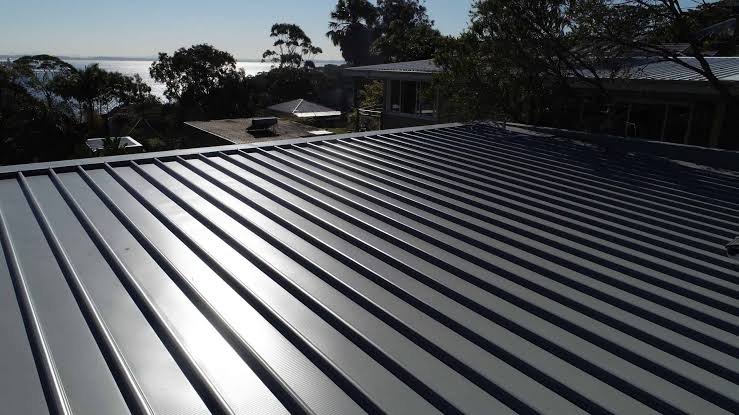
3. TRAY / STANDING SEAM PROFILE (Architectural High-Rib)
   ||___________________||___________________||
   (Wide flat pan with tall narrow seams; concealed or clip-fixed)
Building designers and property owners navigate three primary performance criteria when selecting a profile: minimum roof slope (pitch), rainwater runoff volume, and wind-uplift resistance. Traditional sinusoidal corrugated profiles require steeper slopes to shed water effectively without backing up over the side laps. Modern trapezoidal profiles feature deeper ribs and wider drainage channels, allowing them to carry larger volumes of water at significantly lower roof angles. Architectural tray profiles feature tall vertical seams that eliminate exposed surface fasteners, creating a watertight barrier suitable for high-end contemporary designs.
Evaluating longrun steel roofing profile options New Zealand standards govern involves aligning profile selection with the New Zealand Building Code (NZBC) and the New Zealand Metal Roofing Manufacturers (NZMRM) Code of Practice. Factors such as proximity to breaking surf (marine zones), thermal movement allowances, and structural snow loads dictate whether a profile requires heavy-gauge steel, specialized marine substrates, or specific crest-fixing fastener patterns.
Major Longrun Profile Categories and Specifications
New Zealand roll-formers produce several standardized profile categories, each engineered for distinct architectural aesthetics and roof pitches.
| Category / Type | Description | Common Use Case | Time / Cost / Effort Level |
| Traditional Corrugate | Symmetrical, sinusoidal wave pattern with a cover width of roughly 760mm. Minimum pitch typically 8 degrees. | Heritage villas, rural baches, suburban homes, wall cladding. | Moderate cost; standard installation labor; fast layout. |
| Standard Trapezoidal (5-Rib / MC760) | Clean geometric profile with sharp trapezoidal ribs and flat drainage pans. Minimum pitch down to 3 degrees. | Modern residential homes, commercial sheds, low-pitch extensions. | Moderate cost; low-to-medium labor complexity; versatile. |
| Wide-Span Deep-Rib Trapezoidal | Deep trapezoidal flutes (30mm–50mm rib heights) offering high water capacity and long span strength. | Low-pitch commercial roofs, industrial warehouses, large rural structures. | Moderate-to-high cost; requires heavy-gauge steel (0.55mm); fast coverage. |
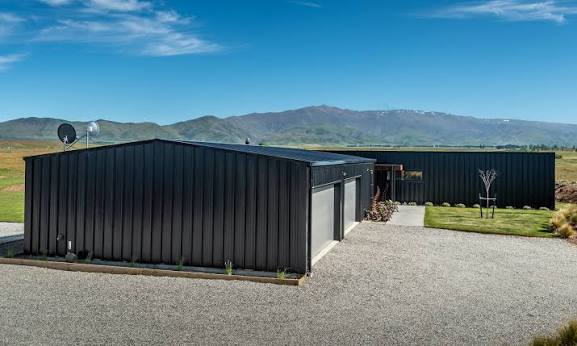
| Architectural Tray / Standing Seam | Wide flat pans bordered by tall vertical seams (25mm–38mm) using hidden clips or snap-lock joints. Minimum pitch 1 to 3 degrees. | High-end contemporary homes, coastal architectural builds, wall cladding. | High material and labor cost; specialized trades required; no exposed fasteners. |
Selecting the Appropriate Profile
Choosing among these longrun profile variations requires assessing the structural pitch of the roof deck and the surrounding environment. For additions or retrofits on low-sloped roofs under 8 degrees, standard corrugate cannot be legally specified under NZBC E2/AS1 without custom underlayment and engineering approval. In these low-pitch applications, a 5-rib trapezoidal or architectural tray profile must be selected to guarantee water drainage and prevent lap capillary draw.
Practical Application Scenarios Across New Zealand Climates
Scenario 1: Coastal Villa Restoration in Auckland or Wellington
Restoring an older villa or bungalow in an exposed marine zone subject to high wind-driven rain and severe salt spray.
-
Key Components: Traditional corrugated longrun steel profile, marine-grade substrate (e.g., COLORSTEEL® Altimate® aluminum or Maxam® steel), Class 5 anti-corrosive screws with EPDM washers, high-performance synthetic underlayment.
-
Installation Steps:
-
Strip old corrugated iron down to timber purlins; inspect for rafter decay.
-
Install synthetic roof underlayment with adequate drape to manage condensation.
-
Lay pre-painted longrun corrugated sheets square to the fascia, overlapping side laps away from the prevailing wind direction.
-
Fasten sheets through the crests of every second or third corrugation using Class 5 hex-head fasteners.
-
Scribe custom ridge cappings and soft-edge lead-free flashings to match the sinusoidal wave profile.
-
-
Why Relevant: Corrugated longrun honors the historical character of heritage New Zealand homes while replacing leaky short-sheet iron with continuous, marine-protected steel.
Scenario 2: Modern Low-Pitch Architectural Home in Central Otago
Constructing a contemporary residence featuring low-sloped roof planes (3 to 5 degrees) in a region subject to heavy winter snow loads and hot summer sun.
-
Key Components: 5-rib trapezoidal profile (e.g., MC760) or tray profile in 0.55mm BMT high-tensile steel, infrared-reflective dark paint finish (e.g., FlaxPod or Grey Friars with IR technology), high-temperature self-adhering underlayment.
-
Installation Steps:
-
Verify timber purlin spans meet manufacturer load-span tables for snow load requirements.
-
Install self-adhering underlayment over roof netting and insulation.
-
Run continuous longrun trapezoidal sheets from ridge to eave in single lengths.
-
Fasten sheets using crest-fixing screws fitted with load-spreading profile washers.
-
Install snow-retention brackets where roof planes overhang entryways or pedestrian paths.
-
-
Why Relevant: Trapezoidal profiles channel snowmelt and high water volumes safely at low pitches where standard corrugate would overflow.
Scenario 3: High-Wind Exposed Farm Homestead or Rural Build
Building a rural residence or farm building in Canterbury or Taranaki exposed to extreme katabatic gusts (Nor’wester winds) and heavy rainfall.
-
Key Components: Wide-span deep-rib trapezoidal profile, 0.55mm heavy-gauge pre-painted steel, high-wind fastener fixing patterns (every crest at eaves and ridge), custom folded barge and apron flashings.
-
Installation Steps:
-
Secure roof purlins to rafters using engineered cyclone ties or heavy-gauge framing screws.
-
Lay heavy-duty roof underlayment or specialized condensation-control fleece-backed steel.
-
Fasten longrun trapezoidal sheets with additional fasteners per square meter according to NZS 3604 high-wind zone schedules.
-
Fold sheet ends upward (turn-ups) at the ridge line to block wind-driven rain from entering the roof cavity.
-
-
Why Relevant: Deep-rib profiles offer exceptional section modulus stiffness, preventing panel flutter and oil-canning during gale-force wind events.
+-----------------------------------------------------------------------------------+
|                            SCENARIO COMPARISON MATRIX                             |
+-------------------+----------------------------+----------------------------------+
| Metric            | Heritage Coastal Villa     | Low-Pitch Modern Architectural   |
+-------------------+----------------------------+----------------------------------+
| Primary Profile   | Traditional Corrugate      | 5-Rib Trapezoidal or Tray        |
| Min. Roof Pitch   | 8 Degrees                  | 3 Degrees (Trapezoidal) / 1° (Tray)|
| Primary Hazard    | Salt Spray & Coastal Rust  | Low Slope Water Backup & Snow    |
| Key Fastener Type | Class 5 Crest Screws       | Load-Spreading Profile Washers   |
+-------------------+----------------------------+----------------------------------+
Project Planning, Cost Evaluation, and Resource Allocation
Budgeting for a longrun steel roof in New Zealand involves accounting for material gauge, coating class, profile complexity, scaffolding, and licensed trade labor. Material pricing varies between standard Zincalume®, pre-painted steel (such as COLORSTEEL® Maxam®), and marine-grade aluminum (COLORSTEEL® Altimate®).
Note: Financial figures represent generalized industry estimates in New Zealand Dollars (NZD). Costs fluctuate based on regional labor availability, roof pitch, scaffolding access, and material supply chains.
| Category | Estimated Cost Range (NZD) | Explanation | Optimization Tips |
| Corrugated / Trapezoidal Supply | $25 – $40 per lineal meter | Standard 0.40mm pre-painted longrun steel panels. | Order sheets in full roof-run lengths to eliminate end-lap waste. |
| Architectural Tray Supply | $55 – $90 per lineal meter | Premium tray or snap-lock panels requiring specialized roll-forming. | Use tray profiles primarily on visible roof planes to balance aesthetics and budget. |
| Complete Installation (Full Supply & Labor) | $90 – $150 per sq. meter | Includes old roof removal, underlayment, flashings, longrun steel, and licensed labor. | Group scaffolding installation with fascia/gutter painting to share access costs. |
| Marine-Grade Aluminum Upgrade | +30% to +50% material premium | Recommended for properties within 100m to 200m of breaking surf (Altimate®/AlumiGard®). | Essential in severe marine environments to retain manufacturer anti-corrosion warranties. |
Specification Strategies, Design Tools, and Professional Support
Selecting longrun steel roofing profile options New Zealand standards permit involves utilizing technical resources and manufacturer support systems.
1. NZMRM Code of Practice and Load-Span Tables
-
Description: Comprehensive engineering technical guidelines published by the New Zealand Metal Roofing Manufacturers association, detailing wind uplift limits, purlin centers, and lap details.
-
Advantages: Ensures full compliance with the New Zealand Building Code (NZBC Clause E2); universally accepted by local city councils.
-
Disadvantages: Highly technical; requires architectural or trade experience to interpret correctly.
2. Manufacturer BIM and CAD Detailing Portals
-
Description: Downloadable digital 3D models and construction detail files (Revit, DWG) provided by major steel roll-formers.
-
Advantages: Allows architects to integrate precise profile heights, flashings, and valley junction models directly into building consent drawings.
-
Disadvantages: Profile geometry varies slightly between specific regional roll-forming manufacturers.
3. Licensed Building Practitioners (LBP) – Roofing
-
Description: Certified trade specialists legally registered in New Zealand to install or supervise restricted building work on residential roof structures.
-
Advantages: Ensures correct fixing torque, flashings, and weather-tightness warranties; required for council sign-off.
-
Disadvantages: High demand can lead to project scheduling lead times during peak summer construction months.
Common Installation Risks, Failure Modes, and Mitigation
-
Swallow-Tail Swarf Corrosion: Fine steel filings created when drilling screw holes or cutting panels settle on the pre-painted surface. Rain and dew cause these swarf particles to rust overnight, staining the painted finish. Mitigation: Cut panels exclusively with cold-cutting shears or nibblers (never angle grinders) and sweep or blow-vac the roof deck thoroughly at the end of each day.
-
Capillary Water Draw on Low Pitches: Installing corrugated profiles on roof slopes under 8 degrees allows rainwater to be drawn sideways and upward between sheet overlaps via capillary action. Mitigation: Enforce minimum pitch rules strict to profile design; specify trapezoidal or tray profiles with capillary grooves for low-slope planes.
-
Over-Tightened Fasteners and Neoprene Washer Crush: Driving screws with excessive torque crushes the rubber sealing washer, cracking the UV-resistant seal and causing leaks around fastener shanks. Mitigation: Use torque-limiting screw guns set so the neoprene washer compresses flat without expanding beyond the metal washer rim.
-
Galvanic Corrosion from Dissimilar Metals: Direct contact between longrun steel and copper pipes, lead flashings, or treated timber creates electrolytic corrosion that eats through steel. Mitigation: Use inert isolation barriers, lead-free soft-edge flashings, and Class 5 coated fasteners compatible with the steel substrate.
Long-Term Maintenance Protocols and Environmental Care
Pre-painted longrun steel roofs are exceptionally durable, but regular maintenance is required to validate manufacturer warranties—especially in unwashed zones beneath eaves.
-
Bi-Annual Washing of Unwashed Zones: Rain washing naturally cleans exposed roof planes. However, sheltered areas—such as eaves, overhangs, carport undersides, and wall cladding under bargeboards—accumulate airborne sea salt and atmospheric grime. Wash these areas every six months with fresh water and a soft-bristle brush.
-
Clearing Organic Debris from Valleys and Gutters: Accumulated pine needles, moss, and leaves hold moisture against painted edges, causing paint blistering and edge creep. Clear valleys and gutters twice a year.
-
Touch-Up Paint Restrictions: Factory-baked silicone-polyester or PVDF coatings age differently than air-dry touch-up paints. Minor scratches should generally be left alone, as touch-up paint will fade at a different rate and create prominent discolored spots.
-
Inspection of Sealants and Fastener Washers: Inspect rubber washer integrity around chimneys, skylights, and apron flashings every 5 to 7 years.
+------------------------------------------------------------------+
|               NZ LONGRUN STEEL ROOF MAINTENANCE CHECKLIST         |
+------------------------------------------------------------------+
| [ ] Hose down sheltered "unwashed zones" under eaves with fresh water|
| [ ] Clear leaves and organic moss from internal valley gutters   |
| [ ] Inspect Class 5 screw washers for UV cracking or over-tightening|
| [ ] Check pipe flashing boots (Deektites) for dry-rot or splits  |
| [ ] Ensure tree branches are trimmed back at least 2 meters      |
+------------------------------------------------------------------+
Compliance Documentation and Warranty Verification
To satisfy New Zealand council building inspectors and maintain property value, systematic record-keeping is required upon roof completion.
-
LBP Record of Work (RoW): Formal legal documentation signed by the licensed roofing practitioner certifying that the installation complies with NZBC E2/AS1 and approved consent plans.
-
Manufacturer Environmental Coating Warranty: Warranties issued by primary suppliers (e.g., New Zealand Steel for COLORSTEEL®) providing up to 30–50 years of structural cover and 15–20 years of paint finish cover depending on marine proximity.
-
Product Identification Invoices: Retaining invoices specifying the steel gauge (0.40mm or 0.55mm BMT), profile name, and paint system (e.g., Maxam® or Altimate®) to prove authentic local manufacture.
Illustrative Examples
-
Council Building Code Sign-Off: A homeowner in Christchurch completed a reroof using a 5-rib trapezoidal profile at a 4-degree pitch. By submitting the LBP Record of Work alongside manufacturer load-span tables, the local council issued the Code Compliance Certificate (CCC) without requiring additional structural testing.
-
Warranty Transfer Success During Sale: During the sale of a coastal Nelson home, the prospective buyer requested proof of roof durability. The seller presented the original 25-year COLORSTEEL® Altimate® marine warranty certificate along with a documented log of bi-annual eave wash-downs, reassuring the buyer and preserving full property market value.
Closing Summary
Evaluating longrun steel roofing profile options New Zealand manufacturers provide requires matching visual preference with technical performance. From the classic lines of traditional corrugate on heritage homes to the low-pitch water handling of 5-rib trapezoidal sheets and the sleek aesthetic of architectural tray panels, longrun steel delivers weather-tight protection suited to New Zealand’s varied microclimates. By adhering to minimum pitch guidelines, specifying appropriate marine-grade coatings near coasts, and performing routine maintenance on sheltered roof planes, property owners can ensure their longrun steel roof maintains its appearance and structural performance for decades.
Frequently Asked Questions
What is the minimum roof pitch allowed for corrugated longrun steel in New Zealand?
The standard minimum roof pitch for traditional corrugated longrun steel under the NZBC E2/AS1 acceptable solution is 8 degrees (approximately 1 in 7 fall). Installing corrugated longrun at slopes lower than 8 degrees creates a high risk of rainwater backing up over side laps via capillary action during heavy wind-driven storms. For slopes under 8 degrees down to 3 degrees, a trapezoidal profile should be used; for pitches down to 1 degree, a specialized architectural tray profile is required.
What is the difference between 0.40mm and 0.55mm BMT longrun steel?
BMT stands for Base Metal Thickness, referring to the structural steel thickness before metallic protective coatings and paint layers are applied. A thickness of 0.40mm BMT is the standard residential gauge for light-to-moderate wind zones on standard rafter spans. A thickness of 0.55mm BMT provides a heavier, more rigid steel panel that offers superior impact resistance against hail, reduces visual “oil-canning” (surface wrinkling) on long tray profiles, and allows for wider purlin spacing in high-wind or heavy-snow regions.
How often does a longrun steel roof need to be washed in New Zealand?
Rainfall naturally cleans exposed, sloped sections of a longrun steel roof. However, sheltered areas that do not receive direct rainfall—such as under eaves, porch ceilings, carports, and overhangs—accumulate corrosive sea salt and industrial fallout. These “unwashed zones” must be manually hosed down with fresh water and cleaned with a soft brush at least every six months (or every three months in severe marine environments within 500 meters of the coast) to maintain manufacturer corrosion warranties.